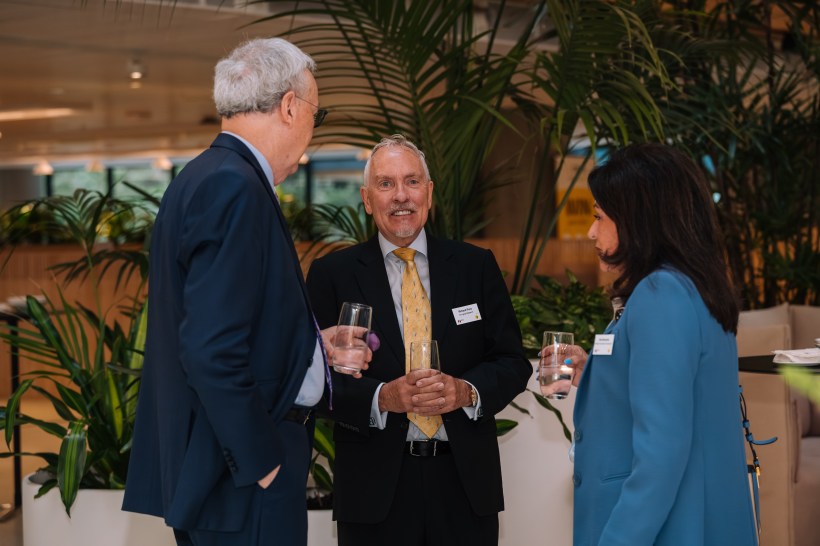
When not preparing client reports or managing the day-to-day operations of Kiri-ganai Research, Managing Director Richard Price volunteers his time across six organisations: the Australian National University, Kids’ Conference Australia, Rabbit Free Australia, Soap4Life, the National Wild Dog Action Plan Coordinating Committee, and—highlighted here—the General Sir John Monash Foundation.
As a member of the Foundation’s ACT Panel, Richard helps interview and recommend candidates from Canberra and surrounding regions for the prestigious General Sir John Monash Scholarship. These scholarships are among Australia’s most competitive postgraduate awards, comparable in stature to the Rhodes and Fulbright programs. The calibre of applicants is consistently exceptional, often leaving panel members humbled and inspired. If the future rests even in the hands of those not selected, it is a future in visionary and capable care.
Following interviews conducted throughout September and October, the Foundation is expected to announce its scholarship recipients in early November. Prior to this, the Foundation—together with the Commonwealth Bank of Australia—hosted an event in Sydney exploring Australia’s geopolitical outlook. For Richard, it was a meaningful opportunity to connect with Scholarship Alumni, Foundation Board members, and the Leadership Academy Advisory Board. In the accompanying image, he is seen sharing water with Professor Paul Wellings and construction industry leader Vera Boyarski.
General Sir John Monash, a polymath and visionary leader, was renowned for his strategic planning, precise coordination, and unwavering care for his troops. Famously, he ensured hot meals were delivered to soldiers even during active battle. His plan for the pivotal Battle of Hamel was designed to last 90 minutes; it concluded in 93—with victory. His legacy lives on through the Foundation’s scholars and alumni, who continue to serve Australia and the world across diverse fields including health, engineering, science, social and psychological wellbeing, music, and the arts.
Kiri-ganai Research’s contributions to these volunteer organisations—however modest—are made with deep commitment and pride.

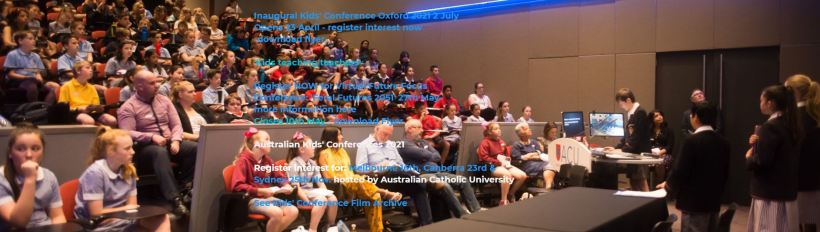
 Over the years, our staff have been reflecting on what we’ve learnt. Here we would like to share some of these lessons with you.
 If you want to be successful, surround yourself with successful people, put the ego aside and listen to them. Let them flourish and you will flourish along with them. But do not abuse the relationship; the more you give the more you will receive.
 The first thing you learn in a ‘fear-of-flying’ class is that the pilot wants to arrive home safely too. It is the same with the many pilots of our great land-mass: Australia’s pastoralists, graziers, and farmers don’t want to crash what they care about most. And it is often the same elsewhere around the world.
 Behind science there will always be scientists, with all their eccentricities and objective obliviousness. Behind scientists there will always be society, with all its idiosyncrasies and means of imposing them. And behind society there will always be humanity, with all its foibles but capacity to embrace diversity. If the social sciences achieve nothing else, they may bring humanity to the ways in which problems (including environmental) are defined and dealt with. But yes, we still need our scientists; more than ever.
 Big pictures are an advocate’s interpretation of the context embracing some phenomenon or other, and there may be as many big pictures as there are advocates. The notion there is only one big picture with respect to any issue is counter to practice. This has consequences for political and community leadership.
 Kiri-ganai Research